WirelessstereoStereoSpeakers.us |

- Onkyo HT-S3300 5.1-Channel Home Theater Receiver and Speaker Package (Black)
- Innovative Music Systems intelliScore Audio to MIDI Converter Ensemble Edition, ¹
- The Difference Between Stereo and Surround Sound
| Onkyo HT-S3300 5.1-Channel Home Theater Receiver and Speaker Package (Black) Posted: 02 Jun 2011 04:55 AM PDT Onkyo HT-S3300 5.1-Channel Home Theater Receiver and Speaker Package (Black)
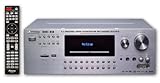
If you're looking for a future-ready receiver-and-speaker package that won't break the bank, your search may be over. Meet Onkyo's 5.1-channel HT-S3300—a system packed with so much advanced technology that it redefines entry-level home theater. As with every A/V receiver in Onkyo's 2010 line-up, you get the latest iteration of HDMI—version 1.4. Three HDMI inputs let you hook up, say, your Blu-ray player, game console, and cable/satellite box—all of which can be output via a single cable to your connected high-res display. Not only is HDMI 1.4 compatible with next-generation 3D video, it also enables a convenient Audio Return Channel. On top of this, the HT-S3300 supports lossless HD audio formats from Dolby and DTS—previously the domain of mid-range to high-end receivers only. But that's not all. The HT-S3300 also provides an overlaid On-Screen Display function for easy adjustment of settings; a Universal Port for one-cable connection of peripherals; Audyssey equalization; four gaming audio modes; and a fully immersive, beautifully balanced 5.1-channel speaker set.  List Price: $ 379.00 Price: $ 379.00 Find More Sound Surround System Products Posts Related to Onkyo HT-S3300 5.1-Channel Home Theater Receiver and Speaker Package (Black)
|
| Innovative Music Systems intelliScore Audio to MIDI Converter Ensemble Edition, ¹ Posted: 01 Jun 2011 06:55 PM PDT Innovative Music Systems intelliScore Audio to MIDI Converter Ensemble Edition, ¹
IntelliScore Ensemble helps you transcribe music by converting multiple-instrument CD audio, WAV, MP3, and WMA files to multitrack MIDI (.mid) files containing the notes played, chord names, and key. You can also compose MIDI music in real time by singing or playing any instrument. Have you ever recorded a great melody for your band or a hot new lick, but now can’t remember what notes you played or sang? Want to play along to a favorite song, but just can’t quite differentiate between the guitar and bass parts? Or are you looking for an easier way to get musical notation from recorded music? Computer software has been available for many years to record music in the form of a MIDI file so it can be automatically converted into notation or edited in a sequencer. The catch is that the music had to be entered by hand or played in on a MIDI-enabled instrument, so you had to know how to play the song in order to create the MIDI file. If you had an unfamiliar piece and wanted to convert it to MIDI, you simply had no alternative but to succumb to the often tedious and time-consuming task of listening to a song over and over again to pick out all the notes by hand. Finally, after many years of research, Innovative Music Systems has created software that converts multi-instrument recorded music to MIDI. Let intelliScore do the difficult work for you. Spend more time making music and less time figuring out the notes. Convert your music in 3 steps: 1. Simply place an audio CD into your computer’s CD drive or start with an MP3, WAV, or WMA file. You can also play an instrument or sing directly into intelliScore by plugging a microphone into your computer. 2. Follow the instructions in the easy-to-use wizard. The one-of-a-kind intelliScore Ensemble audio to MIDI converter listens to your music and transcribes it to a MIDI file containing the notes played, broken down by instrument, as well as chord names and key. 3. Now you can take the MIDI file and do things that are impossible List Price: $ 179.00 Price: Motorola T605 Bluetooth Music Car Kit
Accelerate into the world of Motorola Stereo Bluetooth technology with the Motorola Bluetooth Automotive Music & Hands-free System T605. The T605 is a fun way to stay connected to the people and the music you love with hands-free convenience while on-the-move. Leveraging hands-free and Bluetooth Stereo profiles, the T605 offers one seamless solution providing access to digital music and phone calls directly through the cars sound system. Enabling each device to be in tune with the other, the T605 is designed to pause the music when a call comes in and resume the music when the call ends. Start your engine wired or wireless, youre ready to roll with the T605! List Price: $ 179.99 Price: $ 40.43 Posts Related to Innovative Music Systems intelliScore Audio to MIDI Converter Ensemble Edition, ¹
|
| The Difference Between Stereo and Surround Sound Posted: 01 Jun 2011 04:57 PM PDT The Difference Between Stereo and Surround Sound I got my first surround sound system before Home Theater and surround sound were a common commodity. In fact I was looking for a new TV at the time and I liked of the Sony models and it had surround sound ability with the speakers and the whole deal as one package. I wanted to get the high quality screen but once I heard the sound, it was a done deal. At the time I had no idea of the big differences between stereo and surround sound. Stereo works well for music and even movies recorded with stereo sound. But surround sound recorded movies really come to life with surround sound speaker systems. Most of the latest movies are recorded with surround sound features. A good example is when a person walks across the screen and you are listening with surround sound you hear them approach and then fade away. With surround sound systems special effects are enhanced since it adds a third dimension while watching movies that have been recorded to facilitate surround sound. The addition of the sub woofers has added some depth to the sound produced too. But the real telling difference is that surround sound has directional sound. Sound that comes from different locations and speakers to increase this special effect. Home theater speaker systems will need a TV, or a DVD player and a receiver or amplifier, with six channels of amplification that can handle the surround sound decoding process. If your current TV or DVD player doesn’t have these abilities, the surround sound can’t happen. So make sure that your current equipment is able to work with a Home Theater surround sound speaker system. Many stereo systems have the “third speaker” (sub woofer) that is especially designed to hit that low bass range too. Even three way speakers (speakers that have all ranges represented in three different areas) will increase the quality of stereo sound. But stereo speakers are still the highest sellers since most music is recorded in two channels. And many of the surround sound front and left component speakers don’t have the quality that a good pair of stereo speakers have and won’t reproduce the sound as well as stereo speakers. Home Theater systems aren’t designed to play stereo, and when you play normal stereo music you can tell. Most people don’t listen to music with their televisions or even DVD players. They have an MP3 player or traditional stereo unit that will play CDs. So most people have two separate systems, a Home Theater surround sound system hooked into their TVs and DVD players and a different stereo setup to play music. Each system does well with it’s intended purpose but won’t cross over well. There are some newer very high-end surround systems with stereo quality front speakers but you will pay dearly for the feature. You also see many Home Theater surround sound systems setup entirely wrong. If you don’t separate the speakers to their rightful position (2 in front, 2 in back, and 1 center of the listener and sub woofer can be anywhere) the system won’t deliver the true effect. That defeats the whole desired effect and although you still might get the separation it doesn’t create the sound effect as good. A good pair of stereo speakers will still deliver high quality sound for most movies. Having a good range of high, mid, and low notes and throw in a sub woofer to increase the low range is good. But you won’t get the directional sounds and the surround sound effect you would with a Home Theater setup. If you’ve bought your TV in the past two years, chances are good it does have the surround sound ability built into the unit. But if your TV doesn’t have surround sound, you can get a receiver or even a DVD player that does if necessary. Some surround sound systems are packaged that way, with a DVD player that decodes the necessary surround sound features. Thinking about outdoor stereo speakers? Learn more here: Outdoor Stereo Speakers. Replacing your stereo speakers? Get some helpful information here: Replacement Stereo Speakers.
More Stereo Speakers Home Articles Posts Related to The Difference Between Stereo and Surround Sound
|




| You are subscribed to email updates from WirelessstereoStereoSpeakers.us To stop receiving these emails, you may unsubscribe now. | Email delivery powered by Google |
| Google Inc., 20 West Kinzie, Chicago IL USA 60610 | |

Tidak ada komentar:
Posting Komentar